01 / Our story
A name with a sense of place.
The Bourbon Bay starts with a connection to the Caribbean. Our teas feature key ingredients sourced from the region, bringing a little of the islands into an everyday cup.
Behind the name is a place worth knowing: Bourbon, a small farming district in Portland, Jamaica. In this part of the island, steep hills descend toward rivers and the sea. Rain, cultivated ground, and the work of generations have shaped the landscape.
To understand the place, it helps to begin with what people grew—and how they brought it to market.
02 / Our story
The people who fed an island.
During slavery, Jamaica’s plantations devoted their best land to export crops. Enslaved people were left to grow much of their own food on provision grounds: steep hillsides, rocky gullies, and land the estates could spare.
They worked these plots in the limited time allowed beyond plantation labor. It was hard work under a brutal system. The knowledge it required was their own: what to plant, how to tend difficult ground, which crops could withstand a storm.
Yams, cocoes, cassava, sweet potatoes, plantains, and corn helped sustain households. A productive plot could also yield a surplus. That surplus went to market, where it became income—and a measure of independence within a system designed to deny it.
03 / Our story
Where the island met.
On market days, growers brought produce from the hills to the towns. Women were central to this trade. They carried goods, negotiated prices, extended credit, and built the networks that kept food moving. They became known as higglers, a name still familiar in Jamaica today.
These markets were places of exchange in more than one sense. Along with food came news, relationships, and knowledge shared across estates and communities.
After emancipation, smallholdings and local markets remained essential to Jamaican life. The work of feeding the island continued in the hands of people who had long known how.
04 / Our story
The rivers led to the sea.
Portland’s rivers cut through the hills toward the coast. Overland journeys could be difficult; water offered another way to move goods and connect communities.
Across the Caribbean, skilled canoe builders and boat handlers carried produce and fish to market and supplied vessels offshore. These were livelihoods built on knowledge of water, weather, and trade.
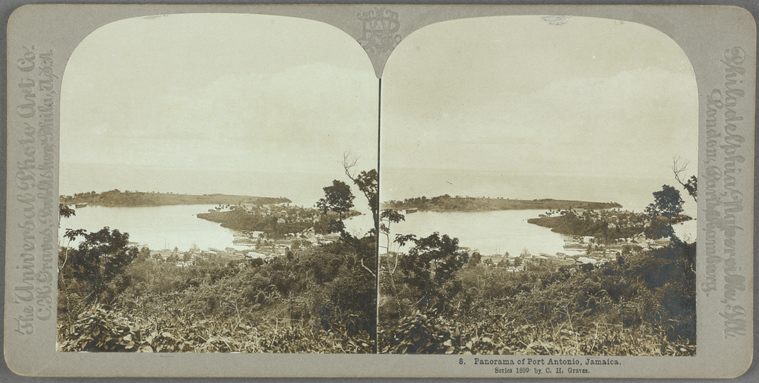
Later, Portland’s banana growers used bamboo rafts to carry their harvest down the Rio Grande toward Port Antonio. The river journeys visitors enjoy today have roots in the practical business of bringing food to the coast.
05 / Our story
What we carry into the cup.
The origin of Bourbon’s name remains uncertain. One possible connection is Bourbon cane, also called Otaheite cane, introduced to Jamaica in the 1790s. It is a plausible explanation, but the documentary link to the district has yet to be found.
The larger story is less elusive: a landscape sustained by growers, traders, and the knowledge passed between them.
For The Bourbon Bay, that history is a reason to look more closely at where ingredients come from. Our connection today is through key ingredients sourced from the Caribbean, and an interest in the places and people behind them.
A cup of tea can be a small, everyday pleasure. There is a whole world behind it.
For the curious
Stay a little longer.
Read the extended history of Bourbon: the provision grounds, the Sunday markets, the Maroon communities, and the district that emerged after emancipation. The essay includes a reconstructed opening, research sources, and notes on what remains uncertain.
Read the full historical essay Research notes & sourcesAbout the photographs
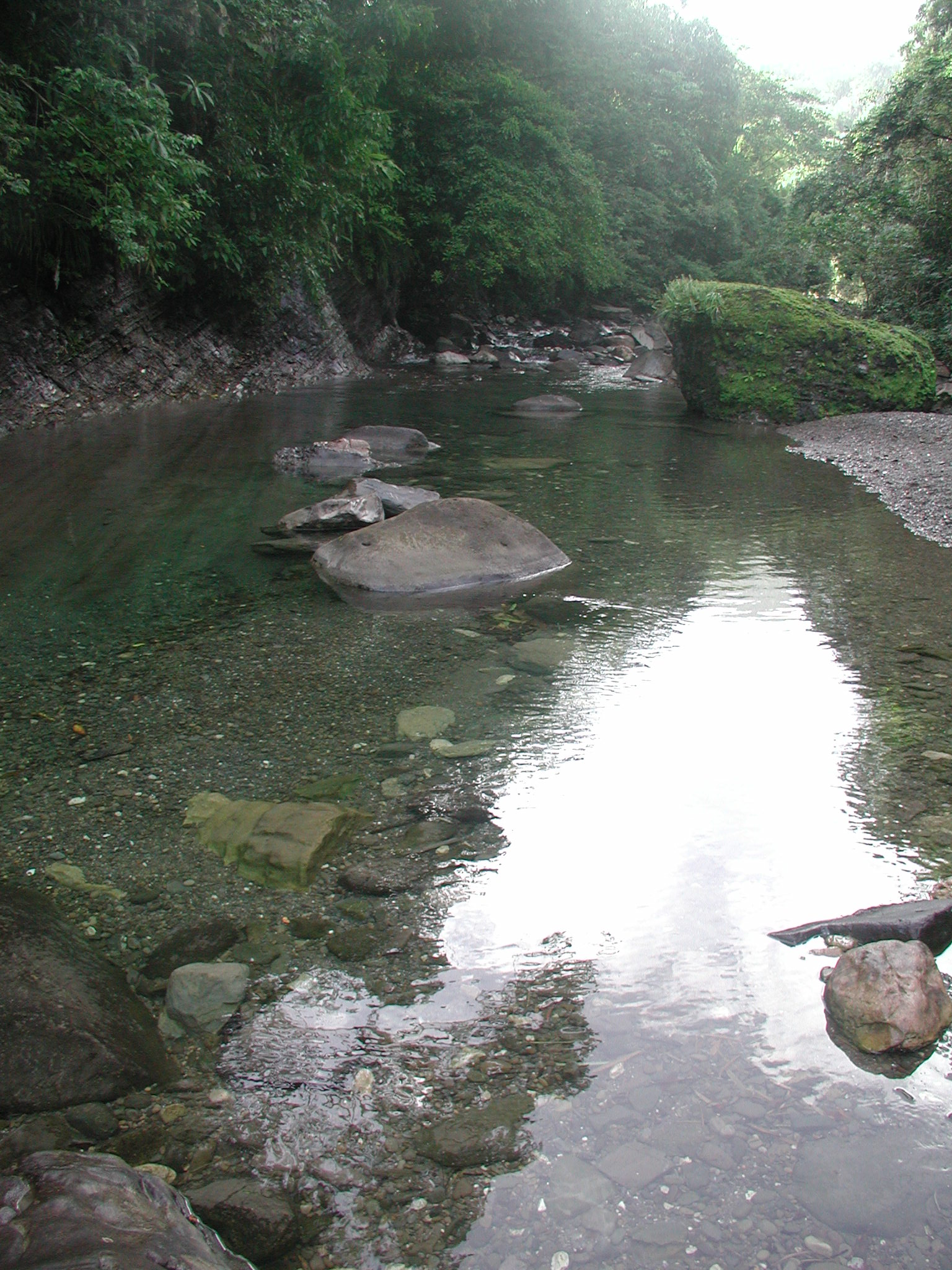
Morning in the Rio Grande Valley, Jamaica, Michael L. Dorn, 1 June 2004. CC BY-SA 2.0. Original photograph, reproduced without alteration.
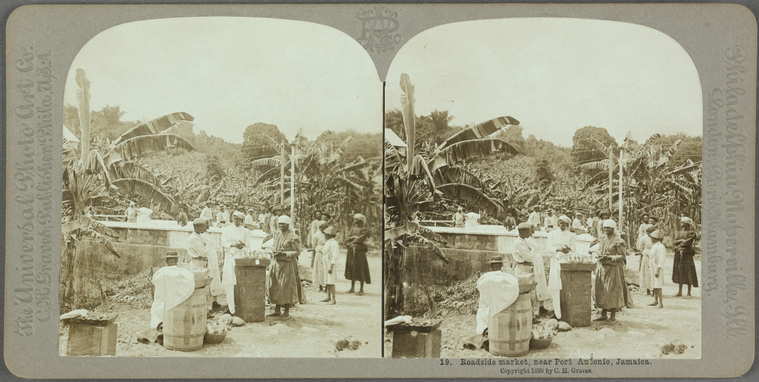
Roadside market, near Port Antonio and Panorama of Port Antonio, Carleton H. Graves, published before 1930. Public-domain stereographs from the New York Public Library, via Wikimedia Commons. Shown in full, including their paired views. These later photographs do not depict the reconstructed scene in the 1790s.